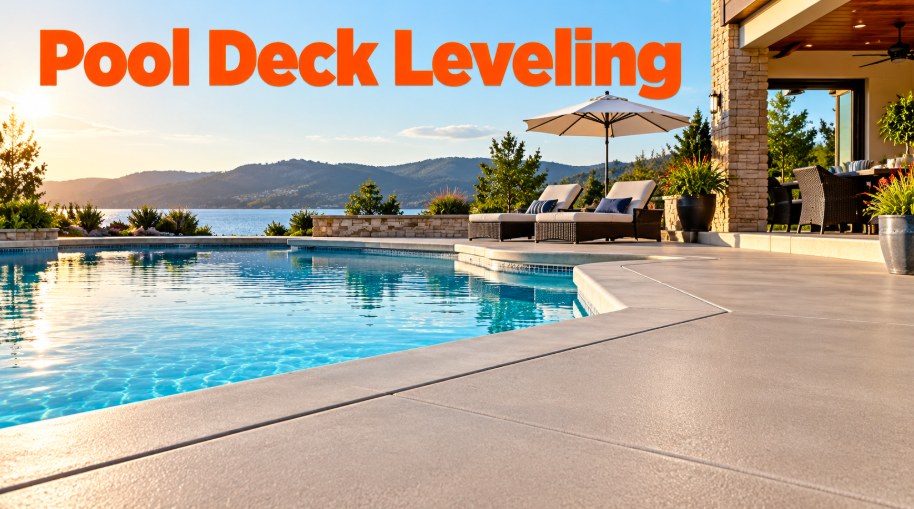
An uneven pool deck can affect both the appearance and safety of a swimming area. Concrete that has settled around the pool may create raised joints, low spots, drainage problems, and uncomfortable transitions for barefoot traffic.
Pool deck leveling focuses on restoring the elevation of existing concrete while working carefully around the pool structure.
Concrete Leveling Around Swimming Pools
Pool decks experience conditions that are different from many other concrete surfaces.
They are regularly exposed to water, landscaping irrigation, temperature changes, foot traffic, and construction backfill surrounding the pool shell.
Over time, these conditions can contribute to movement beneath the deck.
When sections settle, leveling may allow the existing concrete to be raised rather than demolished.
Why Pool Decks Sink
During pool construction, soil is excavated to create space for the pool shell. The area around the completed structure is later backfilled.
If that soil settles further over time, the concrete deck above it can drop.
Additional causes may include:
- Water entering slab joints
- Drainage issues
- Soil erosion
- Plumbing leaks
- Poorly compacted fill
- Expansive soils
- Landscaping irrigation
- Voids beneath concrete
Because plumbing and the pool structure may be nearby, pool deck leveling should be approached carefully.
Uneven Pool Deck Edges
Even relatively small differences in slab elevation can be noticeable around a pool because people commonly walk barefoot.
An uneven joint may create a sharp or awkward transition.
Leveling can reduce these height differences and create a more comfortable walking area around the pool.
Water Ponding on the Deck
Pool decks are normally designed so water moves away from important areas and toward appropriate drainage points.
When concrete settles, the intended slope can change.
Puddles may remain after swimming, cleaning, or rainfall.
Standing water can contribute to staining and slippery surfaces while allowing additional moisture to enter slab joints.
Correcting slab elevation can help improve drainage when settlement is part of the problem.
Pool Coping and Adjacent Concrete
Concrete immediately adjacent to a pool requires additional consideration.
The relationship between the deck, coping, pool shell, expansion joints, drains, and nearby structures should be evaluated before lifting begins.
The goal is to improve the settled deck without creating unnecessary pressure against fixed pool components.
Leveling Older Pool Decks
Many older pool decks remain structurally useful even after parts of them have settled.
Replacing only one or two slabs may create noticeable color or texture differences.
Leveling allows more of the existing surface to remain intact.
This can be especially helpful for decks with aging decorative finishes that would be difficult to reproduce exactly.
Cracked Pool Deck Concrete
Some cracks are caused by movement while others result from normal shrinkage, age, or stress.
Leveling does not erase cracks, but restoring support underneath a slab may improve its stability.
After leveling, suitable cracks and joints can be evaluated for sealing or additional repair.
Concrete that is extensively broken may need replacement rather than lifting.
Improve the Safety and Appearance of Your Pool Area
A swimming pool should be an enjoyable part of the property.
Correcting settled deck sections can reduce obvious trip points, improve drainage, and restore a cleaner transition between concrete slabs.
When the deck remains in reasonable condition, leveling may offer an effective alternative to extensive demolition.